Widerstand gegen das Entdecken

Resistance to Discovery – Indigenous Peoples in Isolation and the Right to Self-Determination. Around October 12, the “Day of Indigenous Resistance,” an event entitled “Resistance to Discovery” took place at the Graz Museum of Folk Culture.
Christina Korak, interpreter, researcher, and vice president of Latin American Research Austria, invited two extraordinary guests:
Eduardo Pichilingue Ramos, MA, is an ecologist and coordinator of the Cuencas Sagradas Alliance in Peru for the protection of the territories of over 30 peoples in 35 million hectares of Amazon rainforest. For 24 years, he has been working on indigenous rights with a special focus on indigenous peoples in remote areas.
Manuela Omari Ima is the founder of the Waorani women’s organization and was born in the Waorani territory in Yasuní. This area is one of the most biodiverse regions in the world.
In 2012, Ima published her work Saberes Waorani y Parque Nacional Yasuní: plantas, salud y bienestar en la Amazonía del Ecuador (The Knowledge of the Waorani and Yasuní National Park: Plants, Health, and Well-being in the Amazon Region of Ecuador).
The event focuses on the history of the Waorani, an indigenous people in the Ecuadorian Amazon rainforest. Their language, Waoterero, is considered an isolated language with no proven connection to other language families. Traditionally, they lived in self-sufficient family groups on a territory of about 2 million hectares.
In 1938, oil drilling by the Royal Dutch Shell Company triggered a violent upheaval. In 1953, the US-based Summer Institute of Linguistics (SIL) began attempts to contact and convert the Waorani under the guise of linguistic research. After the failed “Operation AUCA” in 1956, in which five missionaries were killed, various Waorani groups were forcibly contacted and resettled in a reserve. Settling down brought diseases such as polio.
To this day, groups of Waorani—known as Tagaeri and Taromenane—live in voluntary isolation and resist any contact. Their territory is under massive threat from oil production. A petition calls for the implementation of the 2023 referendum, which decided to end oil production in Yasuni National Park.
The event was organized in cooperation with the Museum for Austrian Ethnology Graz, the Indigenous Rights Collective (INRICO), the Center for Inter-American Studies, Südwind Steiermark, and other partners.
Live interpreter: Christine Trauner.
Moderator: Christina Korak.
Recorded in October 2024.
Creators: Christina Korak, Walther Moser
Language: German, Spanish
November 2025
Jesús Huamán & César Alcedo: Klänge der Anden

October 12, 1492. Christopher Columbus lands on islands in the Caribbean inhabited by the Lucayan [pronounced lu-KAI-an] and other indigenous peoples. Probably on San Salvador. He comes on behalf of the Spanish crown—in search of gold, land, and wealth. The European conquerors drive the indigenous peoples of the Caribbean, Central and South America from their territories. They destroy their societies, their cultures, their languages. They kill millions of people. But the indigenous peoples resist. This resistance continues – for over 500 years.
You will hear two musicians who embody this resistance.
Jesús Huamán Huanascca [pronounced: He-SUS Wa-MAN Wa-nas-ka] on the Creole harp. He was born in 1954 in a Quechua [pronounced: KETCH-ua]-speaking village in the Peruvian Andes. He taught himself to play his instrument – by listening, by observing.
César A. Alcedo [pronounced SEH-sar al-SEH-do] with his music education method Takilka [pronounced Ta-KIL-ka]. It combines music theory with indigenous symbols of the Andes – the Andean cross and the rainbow flag of the Aymara [pronounced ai-ma-RA].
Live interpreters: Marie-Theres Gruber and Christine Trauner.
Moderator: Kathi Angerbauer.
Organized in cooperation with the Museum for Austrian Ethnology Graz, the Indigenous Rights Collective (INRICO), the Center for Inter-American Studies, Südwind Steiermark, and other partners.
Recorded during the Days of Indigenous Resistance in October 2024 in Graz.
Creators: Christina Korak, Walther Moser
Language: German, Spanish
November 2025
Geschichte indigenen Widerstandes: 532 Jahre Lateinamerika

532 years of indigenous resistance in Latin America and the Caribbean – this is the title of Christian Cwik’s lecture.
The historian and Latin America expert dispels the narrative that indigenous peoples submitted to the colonizers. On the contrary: resistance began as early as January 6, 1493 – just three months after Columbus’ arrival in the Caribbean.
The Lucayanos [pronounced lu-ka-JA-nos] lived on the 3,000 islands of the Bahamas. They were abducted by the Spanish, enslaved, and forced to work in mines. After a few decades, there were hardly any survivors left.
In Cuba, the chief Hatuey [pronounced ka-SI-ke a-tu-EI] fought against the Spanish conquerors from 1511 onwards. At the stake, shortly before his execution, a priest asked him if he wanted to become a Christian in order to go to heaven. Hatuey’s answer: “Do the Spaniards go to heaven too? Then I’d rather go to hell.”
From the Caribbean to the Andes, Cwik traces the history of a resistance that never ceased.
Recorded during the Days of Indigenous Resistance in October 2024 in Graz.
In cooperation with:
- Women’s Action Forum
- Indigenous Rights Collective (INRICO)
- Institute for Theoretical and Applied Translation Studies at the University of Graz
- Kulturvermittlung Steiermark
- Südwind
- uniT
- Museum for Austrian Ethnology Graz
Creators: Walther Moser
Language: German
November 2025
Days of Indigenous Resistance 2024
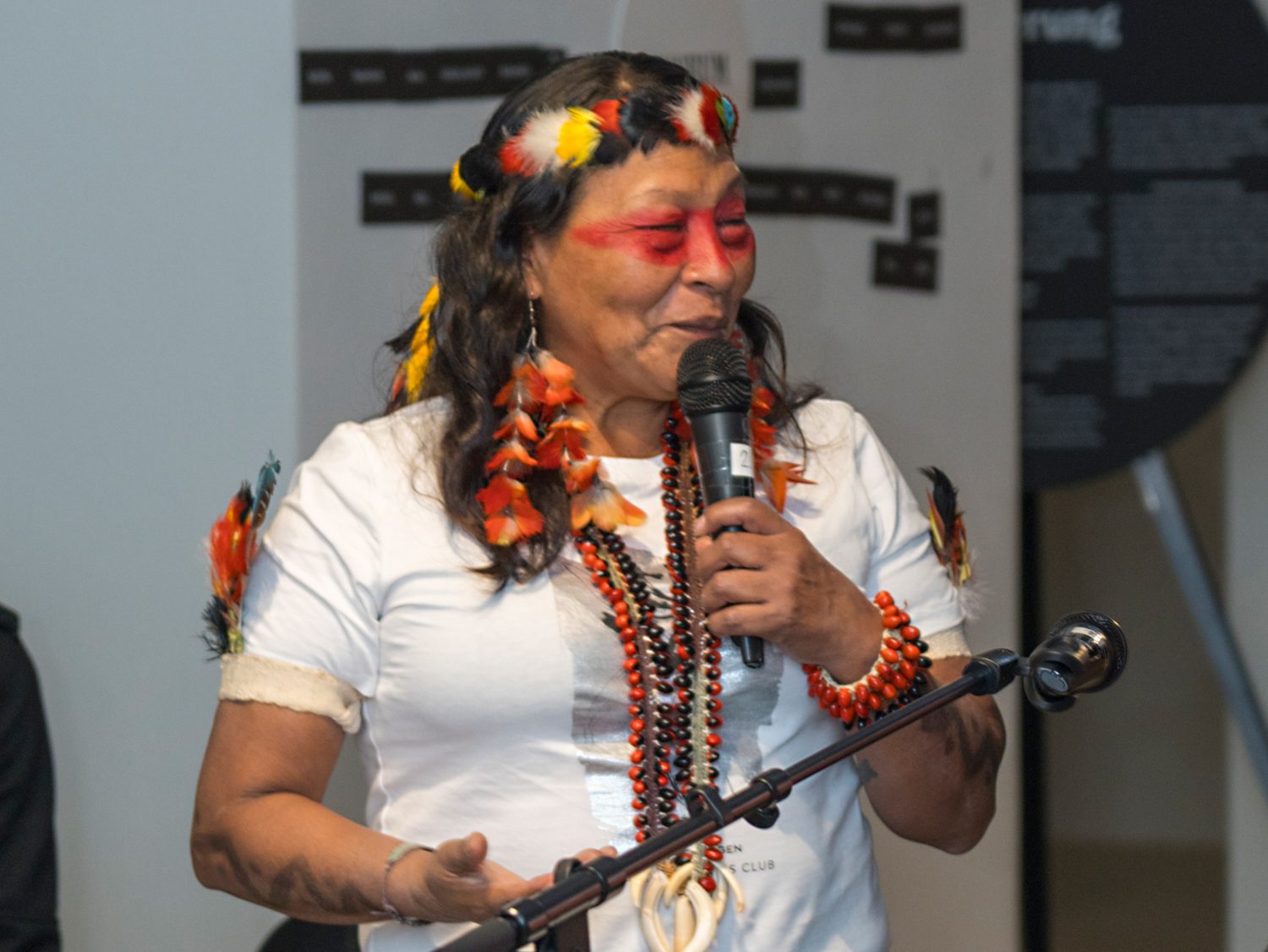
Together with representatives from indigenous communities, activists and scholars we analyse the significance of October 12th as the Day of Indigenous Resistance.
With Roberta Maierhofer, Marcela Torres Heredia, Ana Barón und Peninah Lesorogol
Messages from: Norida Carolina López (Tikuna, Colombia)
Ángel Tipán Santillán (Kichwa, Ecuador)
Aimema Uaui (Murui-Muina, Colombia)
Eduardo (Tikuna, Arú, Colombia)
Zadir Milla Uribe (Perú)
Satty Flaherty Echeverría (USA)
Creators: Manuel Galván, Christina Korak
Language: English/Spanish
Photography: Kulturvermittlung Stmk by Natascha Reiterer
October 2024
Die Ältesten. Hüter:innen des Wissens der Cofán

We present highlights from a discussion event and a guided tour of the exhibition dedicated to the elders of the Cofán people with renowned Venezuelan photographer Antonio Briceño. The exhibition was curated by Evelyn Tschernko.
Interpretation and voices by: Jovana Aleksic, Annalena Pliem, Polona Kramberger, Elisabeth Pichler, Sandra Schranz and Tabea Springer (conference interpreting students at the department of Translations Studies)
Creators: Walther Moser, Christina Korak
Language: German
Photography: Nikola Milatovic
June 2024
Ecuador schreibt Geschichte: Ende der Erdölförderung im Block 43 im Yasuní
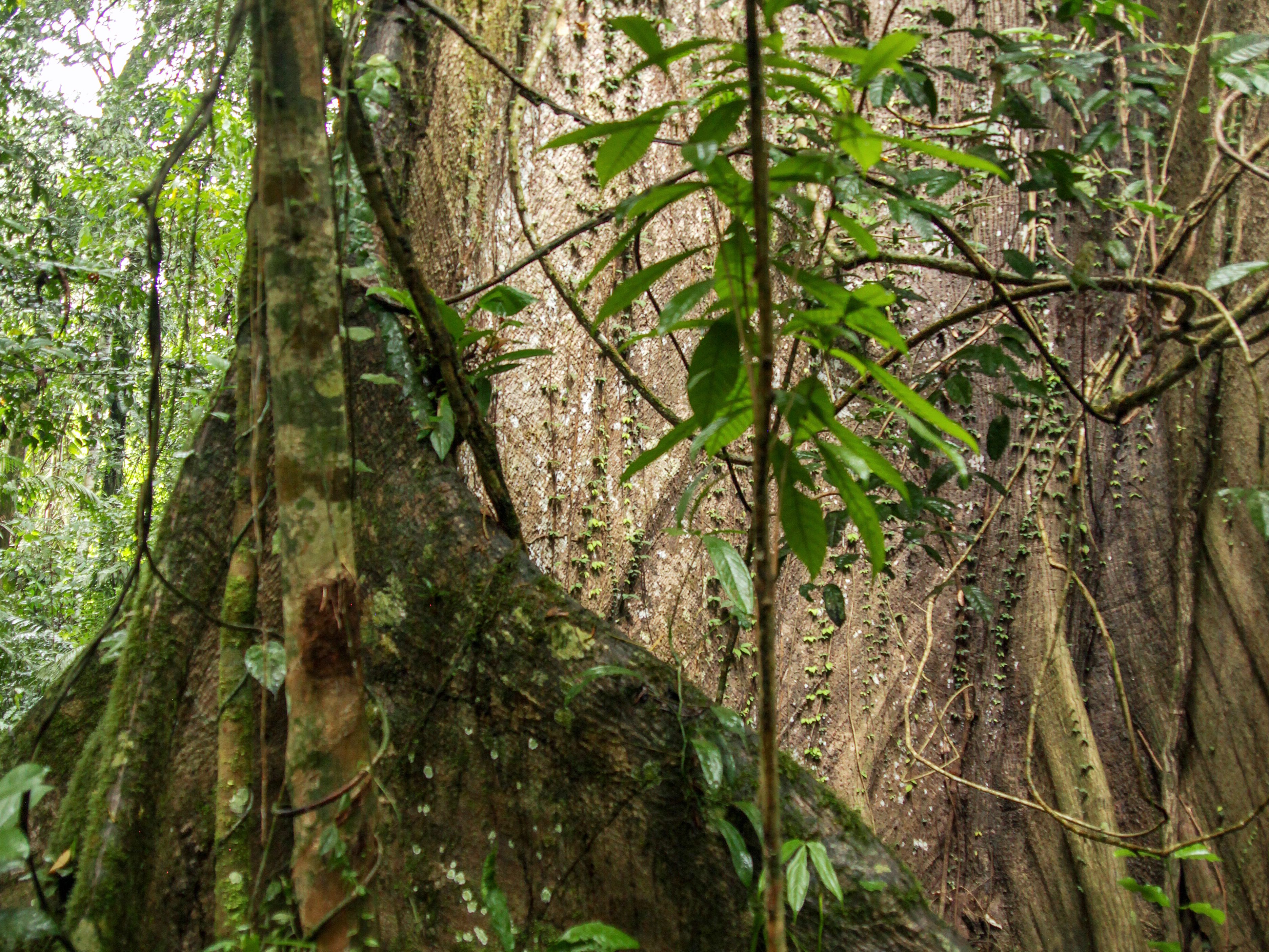
On August 20th 2023, Ecuadorians voted against oil extraction in one oil block in the Yasuní, one of the world’s most biodiverse regions and home to Indigenous peoples in isolation. We discuss the global significance of this decision, its legal consequences and Ecuador’s role in climate action with Eduardo Pichilingue, leading figure in the protection of indigenous peoples in isolation and initial contact.
Creators: Walther Moser, Christina Korak
Language: German
Photography: Juljan Murillo
September 2023
Eine historische Chance: Volksabstimmung gegen Erdölförderung im Yasuní in Ecuador
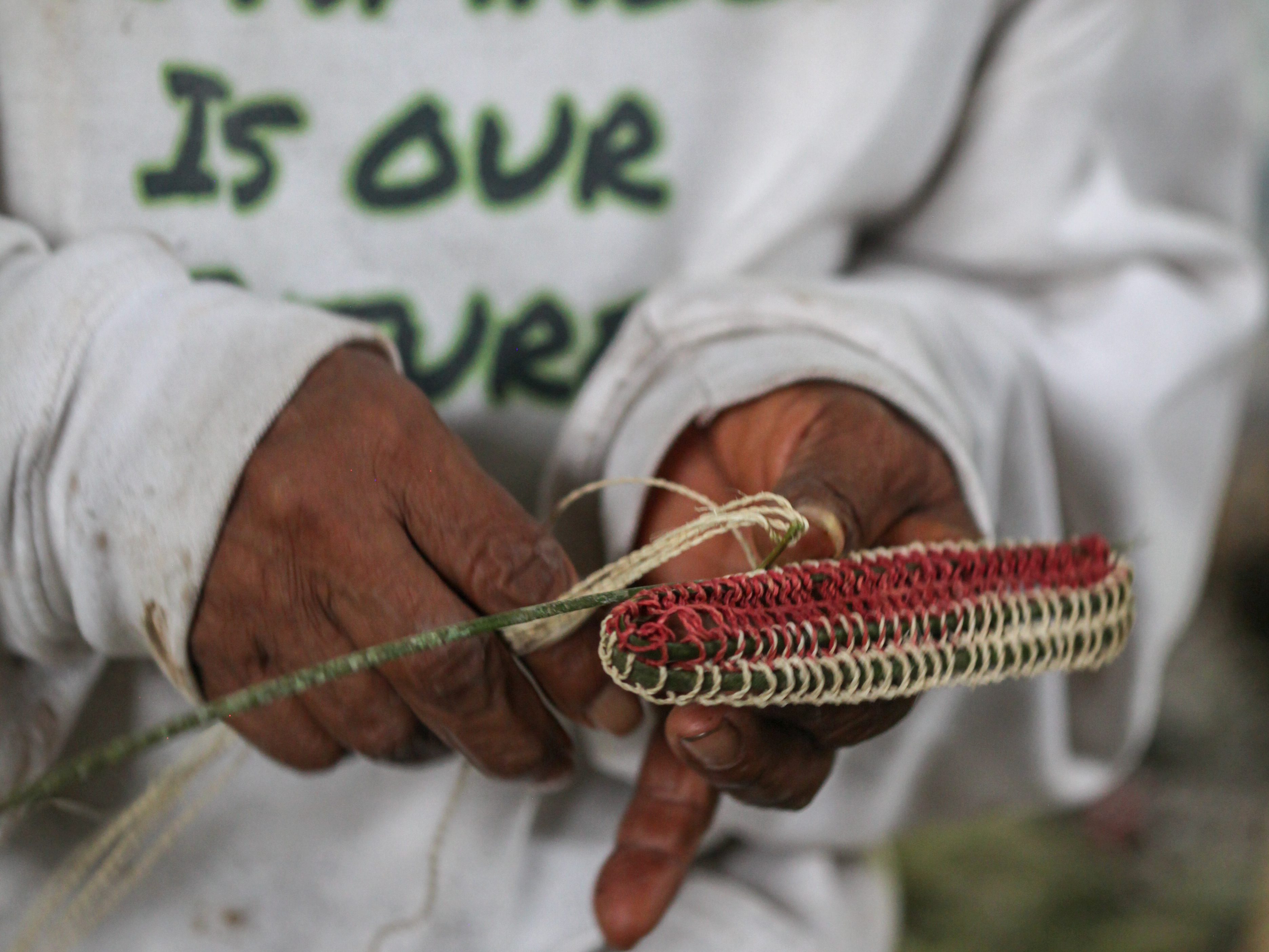
This program informs about the historic chance of the citizens of Ecuador to vote against oil extraction on August 20th 2023. Ahead of this important moment, we spoke with ecologist and activist Eduardo Pichilingue Ramos about the possible global impact on fossil fuel dependence and Indigenous rights of this decision.
Creators: Walther Moser, Paul O’Shea, Christina Korak
Language: German, Spanish, English
Photography: Juljan Murillo
August 2023
Die Geschichte der Vertreibung – Mühsamer Kampf um die Anerkennung des angestammten Mapuche-Territoriums
We speak with Chilean anthropologist and historian Martín Correa Cabrera about his book La Historia del Despojo, which examines the historical land dispossession of the Mapuche in southern Chile. The discussion covers military operations, government policies, and corporate exploitation, as well as the ongoing militarization of Mapuche territory and their struggle to reclaim their land.
Creators: VON UNTEN im Gespräch, Nibaldo Vargas, Christina Korak
Language: Introduction in German, interview in Spanish
June 2023
“Amazonas Akut” – The Tribuna Festival 22

We present highlights from the event Amazonas Akut developed in cooperation with the Styrian institute on Latin America. Activists, scholars and representatives from Indigenous peoples in Brazil, Peru and Ecuador informed about the urgency of the fight against environmental and human exploitation.
With Philipp Sudi, Alonso Jimenez, Alberto Rodriguez
Creators: Walther Moser, Christina Korak, Peninah Lesorogol
Language: German and English
Photography: Juljan Murillo
August 2022
Threats and Challenges of Indigenous Women in the Amazon

Amazonian ecosystems are on the brink of collapse, threatened by deforestation, pollution, and exploitation for profit. Indigenous resistance is growing, with women at the forefront, fighting both environmental destruction and patriarchal power.
In this conversation, Peninah Lesorogol speaks with Gianella Sánchez Guimaraes, a lawyer and spokesperson for the Cuencas Sagradas initiative in Peru, about Indigenous women’s resistance in the Amazon and Kenya. Christina Korak interprets from Spanish to English.
With Gianella Sánchez und Peninah Lesorogol
Editors: Walther Moser, Christina Korak, Peninah Lesorogol
Photography: Peninah Lesorogol
Language: English and Spanish
July 2022
Indigenous Resistance against Destruction of the Amazon Rainforest

The Amazon Basin, holding half of the world’s remaining rainforests and a fifth of its freshwater, is home to unparalleled biodiversity and millions of people, including Indigenous communities, some in voluntary isolation. Its destruction is both a global crisis and a direct threat to those who have lived there since the last Ice Age.
In this conversation, biologist and activist Eduardo Pichilingue speaks with Peninah Lesorogol about cross-border Indigenous resistance in Peru and Ecuador. Christina Korak interprets the discussion.
With Peninah Lesorogol und Eduardo Pichilingue
Editor: Walther Moser
Photography: Juljan Murillo
Language: English and Spanish
July 2022
Rückblick Amazonas Akut!

In this episode, we recap and expand upon Gianella and Eduardo’s insightful contributions at the Amazonas Akut-Tribuna Festival in Graz on March 31. We discuss initiatives to protect Indigenous communities living in isolation along the Peru-Ecuador border and explore current internal and external conflicts affecting the situation of Indigenous women in the Amazon.
Editors and Hosts: Christina Korak, Manuel Galván
Photography: Juljan Murillo
May 2022
Translation between Cosmovisions: Socio-cultural Threats of the Samburu of Northern Kenya

The Samburu community in northern Kenya faces numerous challenges in their fight for linguistic and cultural survival. Through formal education and everyday racism, the use of indigenous languages is suppressed, while capitalism and climate change are driving profound cultural shifts in societies dependent on a healthy environment. Missionaries, through Bible translations and evangelism, undermine Indigenous worldviews. In this context, Peninah Lesorogol and Christina Korak discuss the threats to linguistic and cultural survival and the process of translating between worldviews.
With Rafael Schögler
Editors: Walther Moser, Saifullahi Abdul-rayaq, Gernot Tutner, Christina Korak
Photography: Walther Moser
Language: English and German
April 2022
Die Waorani und die Übersetzung
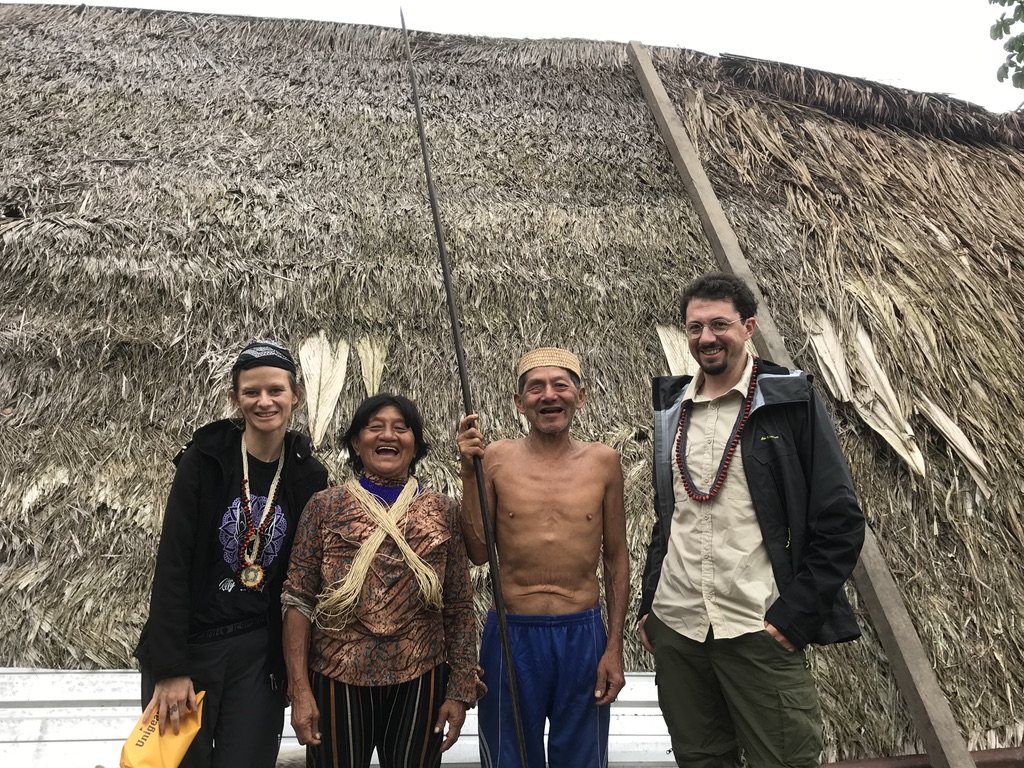
The Waorani, indigenous hunter-gatherers in Ecuador’s Amazon, have faced external pressures from rubber, gold, and oil industries. Since the 1950s, missionary work and translation played a major role in their contact with outsiders. In this conversation with Christina Korak and Rafael Schögler, we explore their history, Christina’s experiences with the Waorani, and whether there should be a right to remain untranslated.
With Rafael Schögler
Editor: Manuel Galván
Photography: Manuela Omari Ima
Language: English and German
March 2022
Header image by Miguel del Cuadro/ instagram: @miguel_delcuadro
„The idea behind the mural proposes the integration of shadows through recognition, which is known as the process of individuation according to Carl Jung. These are the inner demons that we keep inside and that grow larger from childhood if they are not recognized. That is why the snake and the jaguar look playful with their big eyes, representing that childishness.
The image has Amazonian influence because I love jaguars and snakes, and my paternal family is from the jungle.“
 Translating Cosmovisions