We are two Translation Studies scholars working across disciplines and within various geographical, sociocultural and political spheres in Europe, Canada and Latin America.
Our vision
To foster an understanding of translating and interpreting as political acts that take place not only between cultures but between ways of understanding world and acting in it (“cosmovisions”).
Christina Korak
is a community interpreter, a PostDoc researcher at the Department of Translation Studies (University of Graz, Austria) and vice-president of the Association of Researchers on Latin America LAF Austria. Her current project “Remembering_Resistance: Women’s Translations of Territorial, Linguistic and Cultural Rights” is carried out together with the Programa Andino de Derechos Humanos (Universidad Andina Simón Bolívar, Ecuador) and Waorani women of the Ecuadorian Amazon.
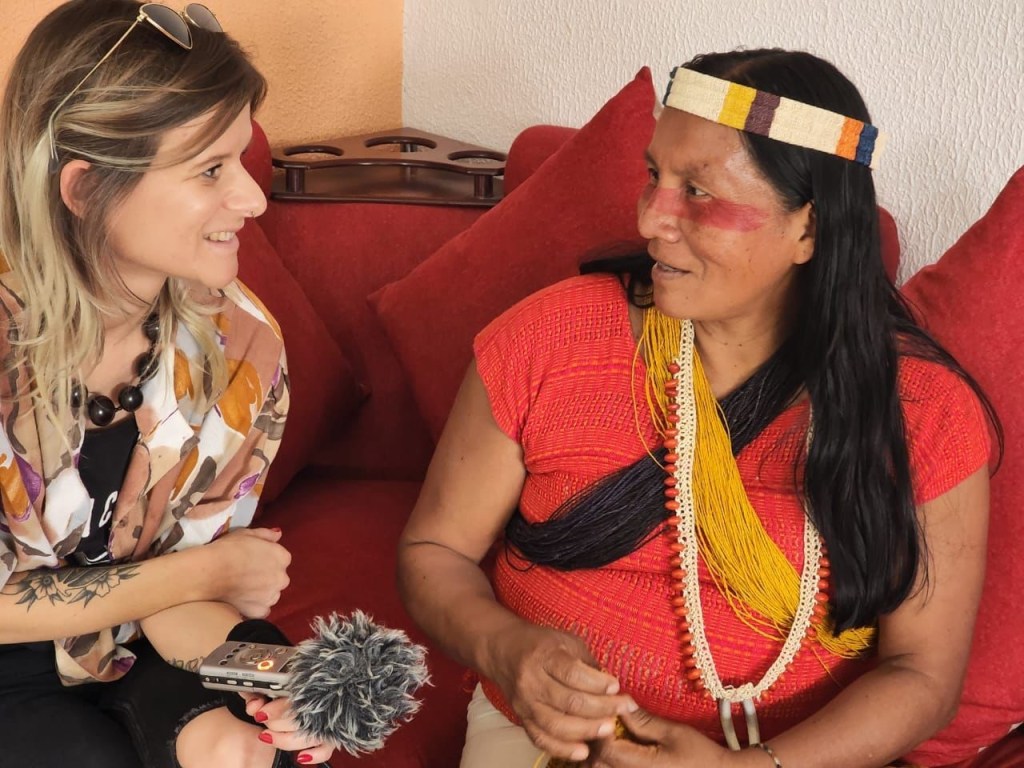
In-between worlds of capitalism and indigenous cosmovisions are the focus of her extensive research on interpreting and translating between the Waorani hunters and gatherers, oil companies, missionaries and NGOs. She understands translating and interpreting as political acts and addresses the relation between language-mediation and collective rights of indigenous peoples.
Rafael Schögler
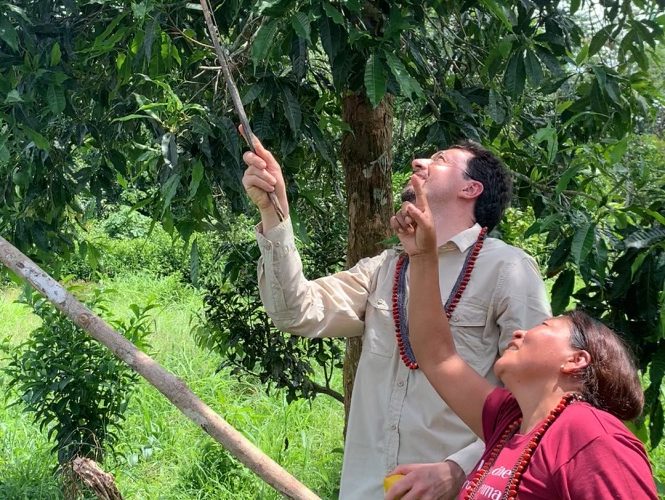
is Professor of Translation and Translation Studies at the Université de Sherbrooke in Canada and affiliated with the University of Graz in Austria. His research approaches translation as a socially negotiated practice that is inherently political and holds transformative potential. He explores the political and social dimensions of knowledge translation, from the translation of books in the social sciences and humanities to the translation of Indigenous cosmovisions and its effects onIndigenous peoples.
Together with Edson Krenak and Christina Korak, he is currently co-editing a special issue titled “Translating Knowledge in, by and for Indigenous Communities: Practices of Epistemic Defiance” for the transdisciplinary journal Translation in Society, where he also serves as Associate Editor.
However
We like to think our work collectively and are thus deeply thankful for all the companions, human rights and indigenous organisations and universities for accompanying, supporting and hopefully benefitting from our work: Cuencas Sagradas, Asociación de Mujeres Waorani de la Amazonía Ecuatoriana, Ömere Texturas de la Selva, Gobierno Territorial Autónomo de la Nación Chapra, Radio Helsinki, Samburu Beads Shop, Gesellschaft für Bedrohte Völker Deutschland, Center for Inter-American Studies Graz, Indigenous Rights Collective Graz…and all the inspiring people behind these names.
Collaborators
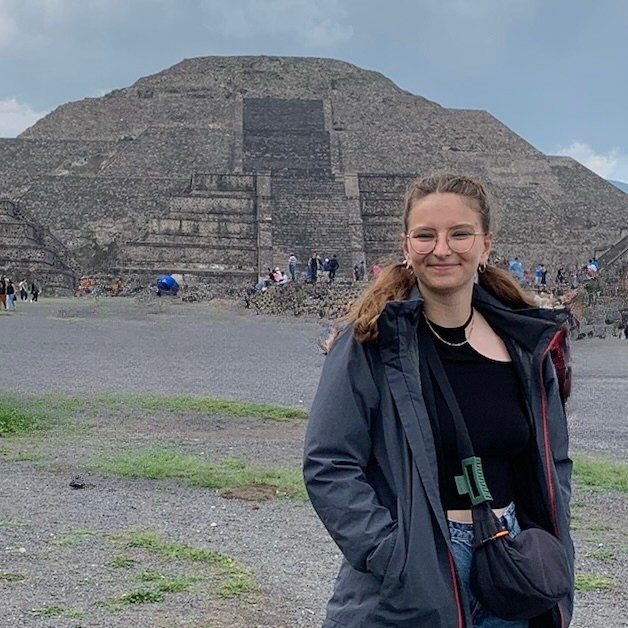
Emma Steinbock
After discovering the concept of cosmovisions in a seminar in my Translation Studies course, I was inspired to write my Master’s thesis on indigenous issues and to contribute to research projects on the topic in any way I can as a Research Assistant. My Master’s Thesis explores how the translation of legal texts into Indigenous languages empowers Indigenous communities to claim their rights and fight for justice, through a comparative analysis of translation policies in New Zealand and Mexico.
 Translating Cosmovisions